

Mastering seasonal peaks: how multi-warehousing helps prevent bottlenecks
12/3/2025
Why traditional inventory management fails during peak season
Traditional inventory management often focuses on optimizing a single central location. This may work in normal times, but rapid spikes in order volume push the intralogistics of a single warehouse to its physical limits.
Staff shortages, limited packing stations or disruptions with local carriers create bottlenecks that threaten your entire revenue. Such fluctuations in the eCommerce calendar are among the biggest challenges for every retailer.
If you want to avoid delivery bottlenecks, you can’t just look at stock levels – you need to rethink your distribution structure. One central warehouse means longer distances to customers and high dependency. If this location fails – through technical issues, strikes or overload (Cap) – your business comes to a standstill. To minimize these risks and meet SLAs (Service Level Agreements) even under high pressure, a mindset shift is essential.
The risky dependence on the "Single Point of Failure"
Focusing solely on one central warehouse not only maximizes failure risk but also increases transit times and shipping costs for distant customers. During peak phases in online retail, this can trigger a severe domino effect:
- Higher cancellation rates: long delivery times cause frustration and cancellations.
- Negative reviews: unreliable deliveries damage your brand image long term.
- Margin erosion: expensive express shipping becomes necessary to meet promised delivery windows.
The key to resilience in peak season fulfillment: what is a multi-warehousing strategy?
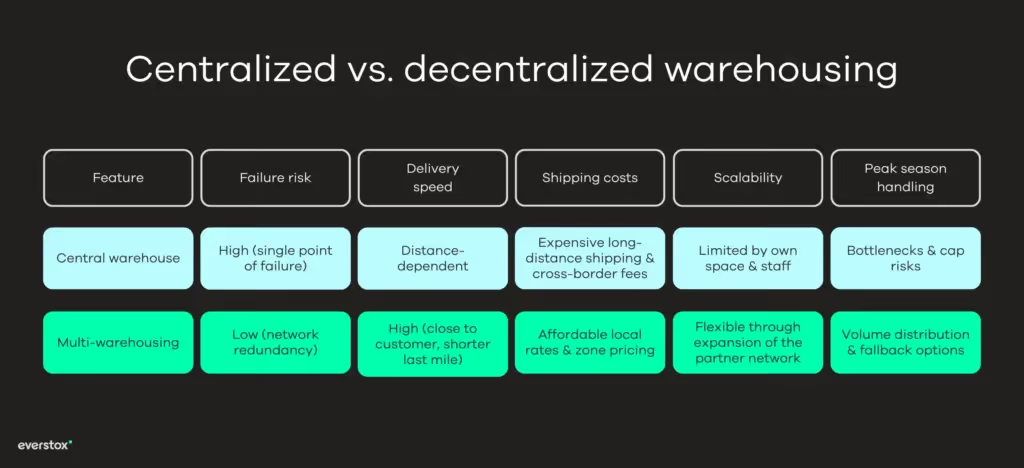
Unlike centralization, decentralized warehousing (multi-warehousing) distributes your inventory strategically across several locations. Instead of shipping all products from one place, you leverage a logistics network of various fulfillment centers chosen to be closer to your main sales regions.
This strategy requires intelligent inventory allocation and Fulfillment software that determines in real time from which warehouse an order should be shipped most efficiently (fastest and most cost-effective carrier). It marks the shift from a rigid infrastructure to a flexible supply chain that scales with your growth thanks to fulfillment automation. Operational performance in online retail stands or falls with precise planning.
The 3 strategic advantages of multi-warehousing against bottlenecks
Why do successful eCommerce players rely on this structure? Because it’s about far more than storage capacity.
1. Maximum supply chain resilience and risk diversification
One of the most important factors during Peak Season is reliability. Supply chain resilience means your operations can absorb disruptions. If one warehouse in the network becomes overloaded, a carrier goes on strike or a region is hit by severe weather, the system automatically reroutes orders to another location.
Your safety stock isn’t tied to a single site – it’s available across the network. This significantly reduces the risk of a complete blackout. Peak-phase preparation should always start early.
Technology advantage: modern WMS or ERP systems use intelligent routing to split and optimize orders based on inventory, carrier availability, shipping costs and cut-off times. The right tech makes all the difference.
2. Speed: shorter lead times and an excellent customer experience
Customers expect speed. Through decentralization, last-mile delivery becomes drastically faster because products are stocked closer to the buyer. This not only reduces lead time (from order to delivery), but also enables options such as Next Day or, in certain regions, even Same Day Delivery – a decisive competitive advantage highly weighted in purchase decisions (especially during the holiday season). Seasonal buying behavior is strongly shaped by time pressure.
3. Significant cost optimization in shipping and cross-border
At first glance, multi-warehousing seems more expensive (multiple locations, split inventory). But the math works out differently: parcels travel shorter distances, which significantly reduces shipping costs.
National vs. international rates: in cross-border eCommerce, using local warehouses in the destination country avoids costly international shipping fees.
Customs & returns: shorter shipping routes simplify customs procedures (e.g., through EU fulfillment hubs) and enable cost-efficient returns via local drop-off points with consolidated return shipments. These savings often offset the additional warehouse costs.
Perfectly prepared for the eCommerce peak season: how to implement your decentralized network successfully
Switching from a central warehouse to a multi-warehousing setup doesn’t have to be complex if you take the right steps and use technology intelligently.
Step 1: data analysis and location selection
Analyze your order data from the past 12–24 months to identify clusters (e.g., high density in NRW, London or Paris). Choosing your second and third locations is based on two factors:
Sales density: where are most of your customers located?
Shipping cost/lead time: where do you save the most shipping distance?
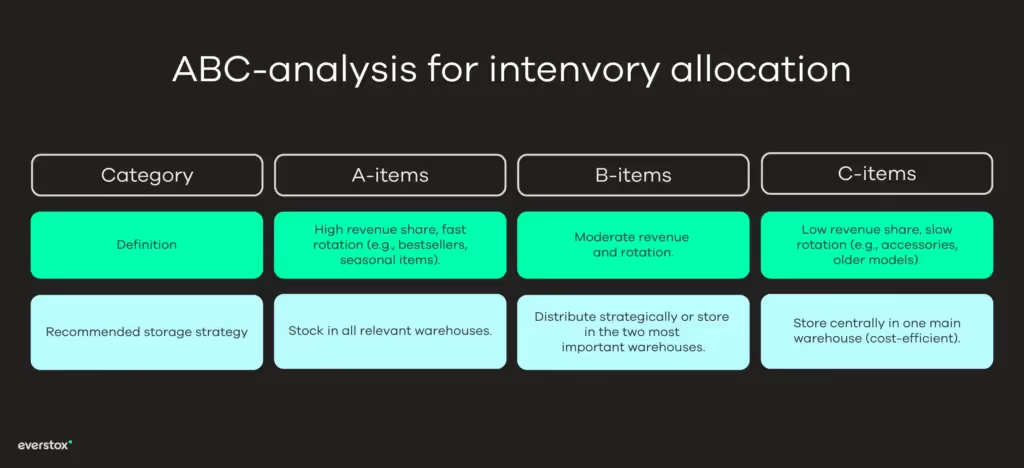
Step 2: intelligent inventory allocation (ABC analysis)
Not every product needs to be stocked everywhere. A data-driven allocation ensures capital isn’t tied up unnecessarily and bottlenecks are avoided: Understanding demand cycles and seasonality is crucial.
Step 3: partner selection and technology integration
Instead of building your own warehouses, partnering with specialized 3PL providers (fulfillment partners) is the most agile and scalable approach. The crucial element is the software:
- The foundation: your logistics platform must connect seamlessly via API (Application Programming Interface) with your shop system (e.g., Shopify, Shopware, Magento).
- Real-time transparency: you need a central overview of all stock levels and orders across your entire network.
- Automation: the system must automatically route an order to the optimal warehouse as soon as the customer clicks “Buy.”
Platforms like everstox provide a major advantage here: you gain access to a qualified European network of fulfillment centers connected through one unified technology.
Checklist: long-term measures for peak season fulfillment
Capacity planning (Cap)
Define maximum daily packing capacities with your partners early and secure contractually guaranteed fallback routes. This works as a crucial stress test.
Predictive analytics
Use historical sales data and marketing plans to distribute inventory levels across warehouses several weeks before expected peaks.
Carrier diversification (multi-carrier)
Reduce dependency on a single parcel carrier per region. In case of bottlenecks, you must switch quickly.
Outbound buffer
Set up a buffer zone at warehouse outbound areas, as carriers are heavily overloaded during peak seasons.
Staff training
Ensure your internal team and the teams of your fulfillment partners are well prepared for the high season.
Conclusion: from warehouse panic to strategic strength
Seasonal peaks like Christmas or Cyber Monday don’t have to be stress factors. For many retailers, a large share of annual revenue is generated during these events. With a modern multi-warehousing strategy, you turn logistical risks into competitive advantages. You prevent bottlenecks while boosting customer satisfaction through faster deliveries and consistently high availability. Take advantage of the opportunity!
A decentralized logistics network is a highly effective safeguard against a “logistics blackout,” combining resilience, speed and cost efficiency. Use technology and strong fulfillment partners like everstox to build the flexible logistics setup modern online retail demands.
Frequently asked questions
What tax and legal considerations apply when storing goods in other EU countries (e.g., Poland or France)?
How do I efficiently control inventory when my stock is spread across several 3PL locations?
Does splitting inventory across multiple warehouses increase the risk of out-of-stock situations?
How can I ensure consistent fulfillment quality across multiple decentralized locations?
How should I adjust my marketing and sales strategy to leverage high order volumes during peak season?
About the author

Anna Kraus
Expert for eCommere & logistics
With over seven years of experience in online marketing, Anna is responsible for the content strategy and editorial development of the everstox website. Her work focuses on eCommerce, logistics, and supply chain management, translating complex operational topics into clear, relevant, and actionable insights.
Since joining everstox in 2024, Anna has taken full ownership of the company’s editorial content, including blog articles, in-depth industry pieces, and the complete everstox glossary. Her content connects current trends in eCommerce and logistics with the real-world challenges faced by growing brands, helping decision-makers navigate an increasingly complex operational landscape.
Anna holds a bachelor’s degree from the University of Salzburg and earned a Master of Business Administration with a focus on health management from IU International University. Her master’s thesis on occupational health management reflects her analytical mindset and her interest in how integrated strategies can strengthen long-term business performance.
By combining academic rigor with hands-on marketing experience, Anna delivers content that goes beyond surface-level commentary. Her work offers readers a clear, well-informed perspective on the intersection of digital innovation, logistics, and supply chain operations, with a strong focus on practical relevance and strategic clarity.
More growth, less effort.
Scale fulfillment, shipping, and warehousing with a platform that brings everything together.
More interesting articles

Fulfillment vs. growth – insights from the abscale podcast
As eCommerce brands grow, fulfillment setups that once worked often start to show their limits.
Not because operations fail - but because complexity increases and the underlying model doesn’t evolve with it.
This is exactly what Johannes Tress discusses in the abscale podcast, and why many fulfillment setups reach a point where they no longer scale.

%20(1704%20x%20960%20px)%20(1).avif)
Logistics out of control? Insights from the UNHYDE podcast
In a recent episode of the UNHYDE podcast, our Co-Founder Johannes Tress shares what actually changes in this phase, and why many eCommerce brands start running into structural challenges long before they realize it.
This article breaks down those patterns and explains where control is typically lost - and what distinguishes setups that scale from those that don’t.

Customs documents: how to avoid delays and in international trade
Your goods are packed, the carrier is booked, and the customer abroad is waiting for delivery – and suddenly everything comes to a halt. The reason: the shipment gets stuck in customs clearance. For eCommerce merchants and fulfillment providers, this is a worst-case scenario. It means delivery delays, unexpected storage fees, penalties, and frustrated customers.
The good news: many of these risks can be avoided with clear processes and complete customs documents – especially when all required documents are fully prepared and accurate.
This guide gives you a practical overview of which documents matter for export, how to avoid errors on the commercial invoice, and how automated customs declarations make your international growth scalable – from understanding liabilities to digital process optimization. Clean customs documentation is crucial in every section of the workflow, across any operational area.