

Online marketplaces in Germany: opportunities for retailers and brands
5/14/2025

Definition and importance of online marketplaces
Online marketplaces are digital platforms where multiple sellers offer their products, giving customers a wide selection. Unlike traditional online shops, marketplace operators usually don’t sell their own products but provide infrastructure for transactions, payment processing, logistics, and sometimes customer service.
In Germany, marketplaces are a vital part of eCommerce, with around 54% of online purchases happening through such platforms. They offer key benefits for sellers:
- Reach: access millions of potential customers without major marketing efforts.
- Trust: leverage the credibility of established platforms like Amazon or Otto.
- Infrastructure: use built-in services such as payments, returns, and often fulfillment.
However, rising competition, high fees, and stricter quality requirements mean that sellers need a clear marketplace strategy and strong fulfillment partners to succeed.
Market overview and user behavior in Germany
Germany is one of the largest and most dynamic eCommerce markets in Europe. Online marketplaces play a prominent role in this.
Market shares of major marketplaces
- Amazon dominates with ~50% market share, particularly strong in electronics, fashion, and FMCG.
- eBay holds about 15%, with a strong presence in used goods and regional sales.
- Otto stands at 10%, focusing on fashion, furniture, and household goods.
- Other key platforms: Zalando, Kaufland.de, Idealo, About You — each strong in its niche.
User behavior on German marketplaces shows clear trends:
- Convenience: easy search, fast delivery, and transparent return policies matter most.
- Price sensitivity: German customers love price comparisons and special deals.
- Security concerns: trust in data and payment security is high. Platforms provide perceived safety.
Shoppers expect fast order processing, flexible delivery options, and real-time order updates—only possible with smart eCommerce fulfillment.
The role of marketplaces in the future of eCommerce
The global eCommerce market is booming. Sales are increasing year by year, shifting the power in digital commerce toward large platforms.
Marketplaces have become key sales channels, and brands must rely on specialized eCommerce solutions to manage logistics and expand their reach.
A look at the landscape shows: competition is fiercer than ever—but the opportunities for scalable success are immense.
Top 10 online marketplaces in Germany
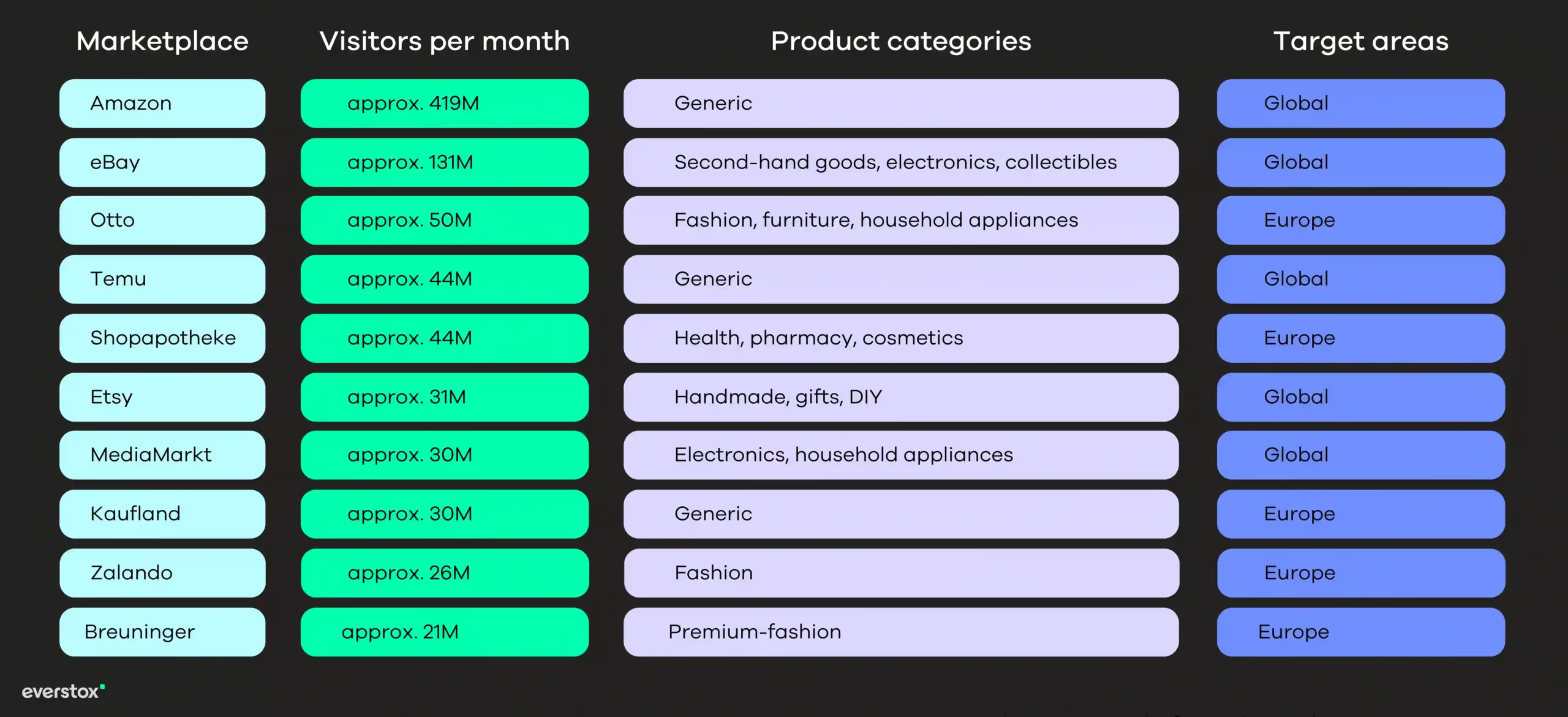
Here we present the most important marketplaces in detail—including visitor numbers, focal points, and special features:
1. Amazon
- Visits/month: 419.4M
- Category: generalist
- Reach: global
Amazon dominates with Prime benefits, same-day delivery in metropolitan areas, and a huge product selection. Fulfillment by Amazon (FBA) offers logistics services to retailers, but many retailers still rely on their own fulfillment solutions for greater flexibility.
2. eBay
- Visits/month: 131M
- Category: generalist
- Reach: global
In addition to auctions, eBay is increasingly developing into a fixed-price platform. Ideal for retailers with niche products or second-hand goods.
3. Otto Market
- Visits/month: 50.9M
- Category: Fashion, Lifestyle, Home
- Reach: Europe
Otto has made a name for itself as a trustworthy supplier and focuses specifically on sustainable products and high service quality.
4. Temu
- Visits/month: 44.3M
- Category: generalist, discount-focused
- Reach: global
Wide product selection, aggressive growth, and high visibility among bargain hunters.
5. Shopapotheke / Redcare Pharmacy
- Visits/month: 44.3M
- Category: Health, Pharma, Beauty
- Reach: Europe
Strong trust bonus for pharmacy products. Ideal for brands in the health, beauty, and nutritional supplement sectors.
6. Etsy
- Visits/month: 31.1M
- Category: Handmade, Gifts, DIY
- Reach: global
High customer loyalty through a community approach. Ideal for creative professionals, smaller brands, and customizable products.
7. MediaMarkt
- Visits/month: 30.9M
- Category: Electronics & Appliances
- Reach: global
A strong player with high brand trust, particularly in the electronics sector.
8. Kaufland
- Visits/month: 30M
- Category: generalist
- Reach: Europe
Strong brand recognition thanks to supermarket presence. Good mix of product range, value for money, and customer trust.
9. Zalando
- Visits/month: 26.6M
- Category: Fashion, Beauty
- Reach: Europe
The best choice for fashion retailers – especially for younger target groups with high purchasing interest. Niche platform with a focus on fashion.
10. Breuninger
- Visits/month: 21.8M
- Category: premium Fashion & Lifestyle
- Reach: Europe
High-quality target group. Ideal for brands operating in the premium segment. Early entry into e-commerce, now a strong platform for designer products.
Conclusion: why marketplaces are crucial for eCommerce success
Online marketplaces are powerful tools for boosting reach, brand awareness, and sales. In Germany, platforms like Amazon, eBay, or Otto stand out thanks to user-friendliness and trust.
But to succeed in these dynamic environments, you need more than just listings: smart B2C or B2B shipping strategies, scalable fulfillment, and responsive logistics are essential.
everstox supports you with a strong fulfillment network, intelligent software, and direct marketplace integration—so you can scale efficiently and keep your customers happy.
Frequently asked questions
What role do online marketplaces play in Germany’s eCommerce sales?
How do online marketplaces differ from eCommerce platforms?
Why is it important for sellers to understand the marketplace landscape?
What should eCommerce businesses consider when choosing a marketplace?
About the author

Anna Kraus
eCommerce and logistics expert
With over seven years of experience in online marketing, Anna is responsible for the content strategy and editorial development of the everstox website. Her work focuses on eCommerce, logistics, and supply chain management, translating complex operational topics into clear, relevant, and actionable insights.
Since joining everstox in 2024, Anna has taken full ownership of the company’s editorial content, including blog articles, in-depth industry pieces, and the complete everstox glossary. Her content connects current trends in eCommerce and logistics with the real-world challenges faced by growing brands, helping decision-makers navigate an increasingly complex operational landscape.
Anna holds a bachelor’s degree from the University of Salzburg and earned a Master of Business Administration with a focus on health management from IU International University. Her master’s thesis on occupational health management reflects her analytical mindset and her interest in how integrated strategies can strengthen long-term business performance.
By combining academic rigor with hands-on marketing experience, Anna delivers content that goes beyond surface-level commentary. Her work offers readers a clear, well-informed perspective on the intersection of digital innovation, logistics, and supply chain operations, with a strong focus on practical relevance and strategic clarity.
More growth, less effort.
Scale fulfillment, shipping, and warehousing with a platform that brings everything together.
More interesting articles

Customs documents: how to avoid delays and in international trade
Your goods are packed, the carrier is booked, and the customer abroad is waiting for delivery – and suddenly everything comes to a halt. The reason: the shipment gets stuck in customs clearance. For eCommerce merchants and fulfillment providers, this is a worst-case scenario. It means delivery delays, unexpected storage fees, penalties, and frustrated customers.
The good news: many of these risks can be avoided with clear processes and complete customs documents – especially when all required documents are fully prepared and accurate.
This guide gives you a practical overview of which documents matter for export, how to avoid errors on the commercial invoice, and how automated customs declarations make your international growth scalable – from understanding liabilities to digital process optimization. Clean customs documentation is crucial in every section of the workflow, across any operational area.
Mastering seasonal peaks: how multi-warehousing helps prevent bottlenecks
Your marketing campaigns for Black Friday or the holiday season are running at full speed, the servers handle the traffic, orders skyrocket – and then everything stops. Not in your shop, but in the warehouse. When parcels remain stuck, throughput times explode and customers wait for their orders, the “logistics blackout” becomes reality.
A single warehouse location quickly turns into a “single point of failure” during peak season fulfillment. The solution for growing eCommerce and online retailers isn’t a bigger central warehouse, but flexibility: a strategy built on multi-warehousing.
This article shows you why decentralized warehousing has become essential in modern eCommerce. We break down the hidden risks of centralization, highlight the strategic advantages of a multi-warehousing setup and offer a clear guide on how to elevate your inventory management through automation and the right partner network.

Optimizing order picking: the ultimate practical guide for eCommerce companies
We’ll show you how to increase the pick rate, reduce the error rate, and noticeably lower your order-to-ship time (OTS). The result: shorter delivery times, higher throughput, more customer satisfaction – and more efficient use of your resources across the entire warehouse system.