
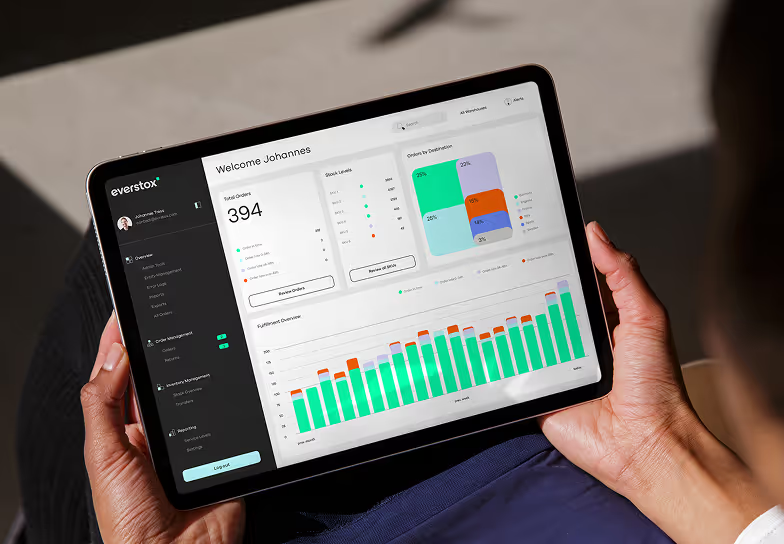

E-fulfillment: what you need to know for your online brand
4/22/2025

What is e-fulfillment?
E-fulfillment refers to the entire fulfillment processing workflow in eCommerce—from order receipt to storage, shipping, delivery to the end customer, and returns if necessary. It specifically covers services tailored to online businesses, unlike traditional fulfillment which may also include supplying brick-and-mortar stores. Specialized logistics providers often take over these tasks entirely, hence terms like eCommerce fulfillment or eCommerce logistics.
In short: e-fulfillment manages all logistical steps after an online purchase—from order import through to customer delivery and beyond.
Scope of e-fulfillment services
E-fulfillment includes a wide range of logistics and service tasks to ensure that online orders reach customers quickly and accurately. Typical services are:
Warehousing: professional warehousing in fulfillment centers, including inventory management and specialized storage for sensitive items.
Pick & pack: assembling the ordered items and packaging them appropriately. Advanced technologies such as Pick-by-Light or -Voice are often used to increase speed and reduce errors.
Shipping: handover to carriers, label creation, customs clearance for international deliveries, and managing different shipping options (standard, express, etc.).
Returns management: handling returns, inspecting goods, restocking or disposal, and issuing refunds. Especially relevant in fashion or high-return industries.
IT Integration: connecting to shop systems, ERPs, and shipping platforms to automate fulfillment and ensure real-time status updates like tracking numbers and stock levels.
Depending on the provider, e-fulfillment may also include other value-added services such as quality checks, kit assembly, gift wrapping, or customer service functions. It is essential that all these components are smoothly interlinked to keep the order-to-delivery time short and the error rate low.
Benefits of e-fulfillment for large online shops
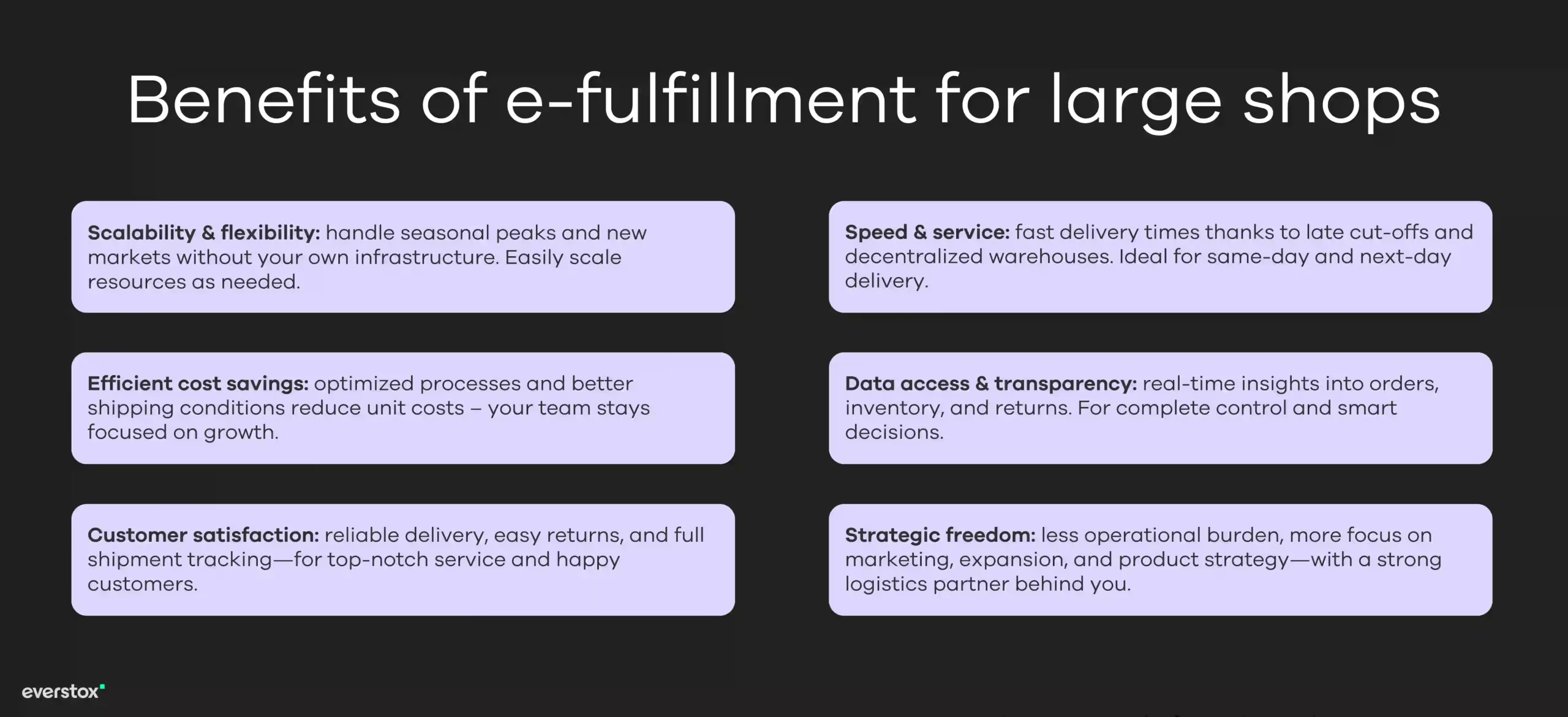
Professional e-fulfillment offers a range of strategic advantages for large online retailers:
Scalability & flexibility
An external e-fulfillment provider typically operates a network of distribution centers and scalable resources to handle fluctuations in demand—from seasonal peaks to rapid expansion in new markets. Storage and staffing capacities can be adjusted flexibly without requiring the retailer to invest in infrastructure.
Speed & service quality
With optimized processes and strategically distributed warehouse locations, orders reach customers faster. Many fulfillment providers enable late order cut-off times and still ship on the same day. This makes it easier to meet today’s expectations for next-day or same-day delivery. Fast and reliable shipping increases customer satisfaction and encourages repeat purchases.
Efficiency & cost reduction
E-fulfillment specialists work with highly optimized processes and often achieve better shipping rates through volume bundling. This means lower cost per order and fewer shipping errors for the online store. At the same time, the retailer’s internal team can focus on core business and growth, while the fulfillment partner ensures operational excellence.
Data transparency & control
Modern fulfillment solutions offer real-time insights into inventory and order status. Merchants can track every order almost in real time and proactively provide updates to their customers. Track & trace features, stock alerts, and reporting dashboards help make informed decisions and spot bottlenecks early.
Customer satisfaction
All of these aspects—fast delivery, low error rate, easy returns processing, and shipment tracking—contribute to a positive shopping experience. Logistics becomes a competitive advantage, as it directly influences customer satisfaction and retention. A professional e-fulfillment service can raise a shop’s service quality to a level that competes with market leaders.
Lastly, outsourcing e-fulfillment gives large shops strategic freedom: while the provider handles logistics, the company can focus on expanding its assortment, marketing efforts, and internationalization—knowing that the operational backbone is reliable.
Criteria for choosing the right e-fulfillment provider
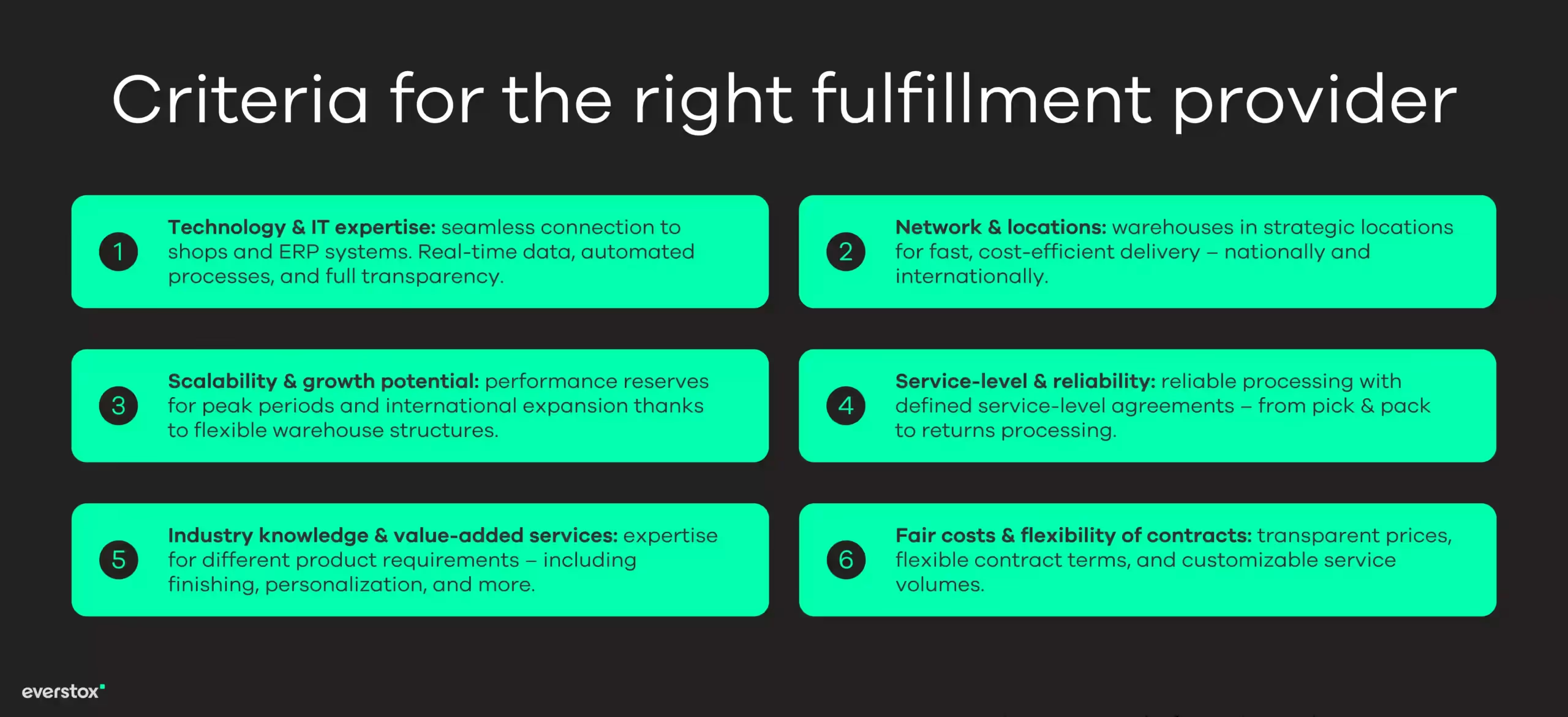
Given its strategic relevance, it’s worth selecting your fulfillment partner with care. The requirements of large online stores are high—decision-makers should consider the following criteria:
Technology & integration
Does the provider have powerful IT systems (WMS, order management) and standard interfaces to common shop platforms or ERP systems? Seamless integration is key to minimizing manual effort and enabling real-time data exchange. Order tracking, inventory transparency, and meaningful reporting also depend on IT quality.
Network and locations
A broad warehouse network with strategic locations allows for faster deliveries to customers (e.g. with multi-warehousing or cross-border eCommerce). Check which countries or regions the provider operates warehouses in and which carrier connections exist. A good provider can deliver goods using the optimal shipping network per destination (e.g. express for cities, more economical for standard deliveries).
Scalability & capacities
The provider should have enough capacity to handle your order volume, even during peak seasons. Ask about experience during times like Black Friday and how additional volumes are managed. Scalability also includes supporting international expansion with additional warehouses in new markets.
Service-level & reliability
Define clear SLAs with the provider—such as maximum processing time from order to shipment, delivery performance by region, picking accuracy (error rate), return processing times, etc. It’s important that your partner consistently delivers high performance, as your customer satisfaction depends on it. References from other brands offer insights into reliability.
Industry focus & value-added services
Check whether the provider has experience with your product category. Different industries have different needs—such as batch tracking in healthcare, serialization in electronics, or specific handling in fashion. A provider with relevant expertise can serve your business more effectively. Value-added services (custom packaging, inserts, customer service) may also be decisive depending on your brand’s model.
Costs & contract conditions
Last but not least, pricing needs to be transparent. Clear pricing models (warehousing, pick & pack, shipping, returns) make comparisons easier. Pay attention to contract length and flexibility—e.g. whether service volumes can be adjusted without long-term commitments.
The best provider isn’t always the cheapest one—it’s the one that aligns with your strategy and grows with your business. Allow time for an RFP process, reference calls, and trial phases to find the right partner.
Key trends and development in e-fulfillment
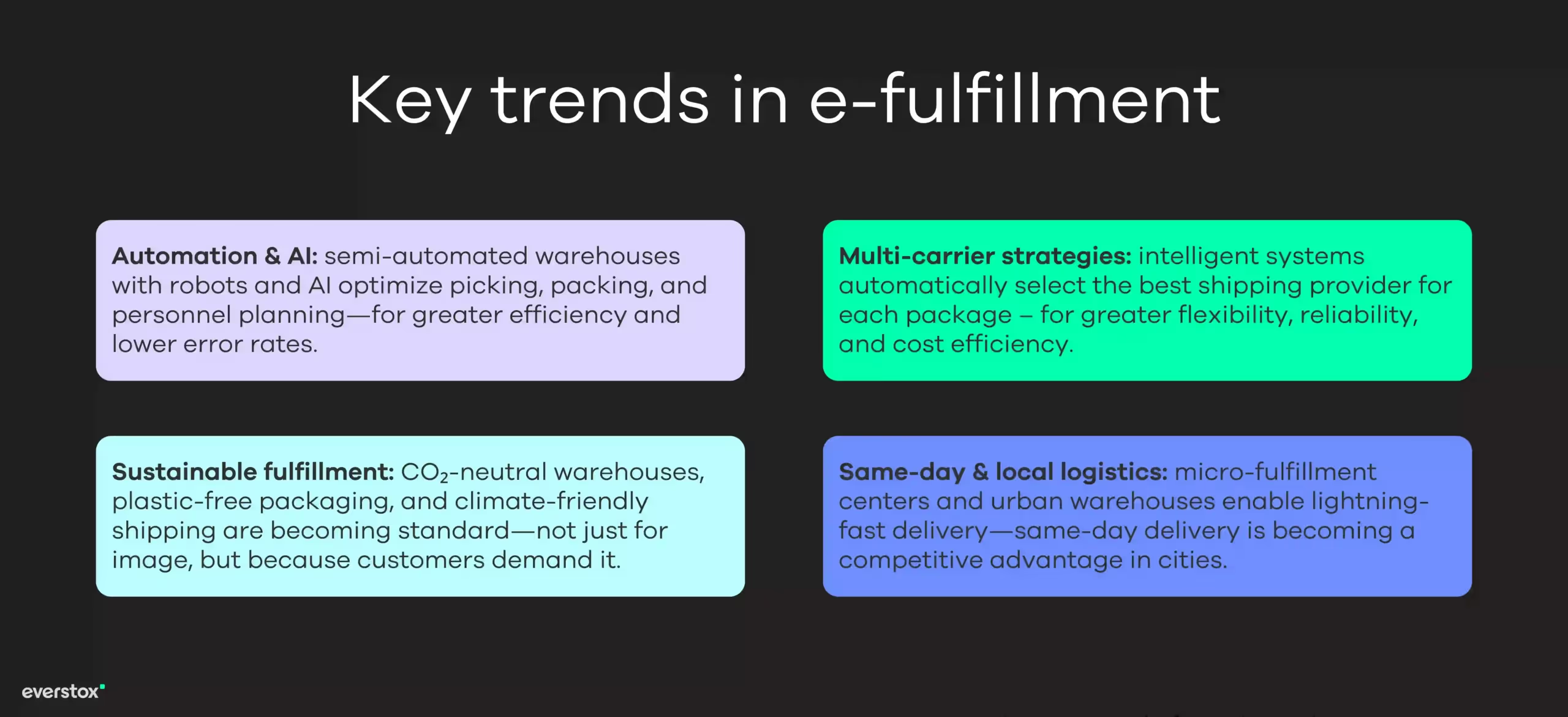
The world of e-fulfillment is constantly evolving. In recent years, several key trends have shaped the industry and are important for decision-makers:
Automation & AI
Warehouse processes are becoming more automated to increase speed and efficiency. Robots and conveyor systems assist with picking and sorting, while AI algorithms optimize walking paths and workforce planning.
Fully autonomous warehouses are rare (for now), but partial automation is booming—from shelf-moving robots to AI-suggested optimal packaging sizes (reducing air shipment). These technologies help cut costs, boost throughput, and reduce errors.
Sustainability
Green logistics has become essential in fulfillment. Providers are working to reduce CO₂ emissions and implement eco-friendly processes—from energy-efficient, partly CO₂-neutral warehouses (solar, LED lighting) to plastic-free packaging and climate-friendly shipping (EVs, carbon offsets). Sustainability isn’t just good PR—it’s becoming a core requirement from major merchants.
Multi-carrier strategies
Rather than relying on a single carrier, many retailers use multiple shipping providers. Smart shipping software helps select the best option per parcel—based on cost, delivery time, or network capacity. This increases flexibility and reduces risk: if one carrier is delayed, another can be used instead. Fulfillment providers often offer integrated multi-carrier platforms that automatically choose the best shipping route.
Same-day-delivery & local logistics
Same-day delivery is becoming more important—especially in urban areas. To make this viable, you need warehouses close to the customer and extremely efficient processes. Key innovations include micro-fulfillment centers (small urban warehouses) and integration with courier networks for the last mile.
Some providers are testing physical stores as mini distribution centers (keyword: omnichannel, e.g. ship-from-store) and drop-shipping directly from suppliers. Same-day isn’t suitable for every product or location, but those who offer it gain a major competitive edge.
Fulfillment is increasingly driven by data. Real-time data feeds help improve forecasting (e.g. regional demand), dynamically manage inventory, and show personalized delivery promises in shops. Return optimization is also growing in importance—by analyzing return reasons, improving reverse logistics, and implementing prevention tactics (accurate product descriptions, virtual try-ons, etc.).
Conclusion
E-fulfillment is far more than just “shipping boxes”—it is the backbone of a high-performing online shop. From the first mile in the warehouse to the last mile to the customer, it impacts every aspect of the customer experience. When done professionally, it provides scalability, speed, and the data that’s essential in modern eCommerce.
Recommendation for decision-makers: make e-fulfillment a C-level topic. Honestly assess whether your current solution can keep up with your growth and requirements. If not, explore specialist service providers or invest in internal optimizations (automation, better IT, more warehouses). Define clear requirements and KPIs when selecting external partners—and collaborate closely to drive continuous improvements.
Watch out for the key trends—from automation to sustainability—they offer real differentiation. A shop that delivers fast and eco-friendly builds a strong brand and earns loyalty. E-fulfillment is the enabler of these promises. With the right blend of tech, strong partners, and process-oriented management, you’ll create a logistics setup that can grow with your online business and delight your customers.
Next steps: launch a strategic check-up of your fulfillment area now. Identify gaps or bottlenecks and develop an action plan—whether through internal optimization or by talking to e-fulfillment providers. Prioritize based on your business strategy: international expansion (→ global network), service excellence (→ speed & quality), or cost-efficiency (→ automation & scale effects). This ensures that your fulfillment is not only fit for today’s demands but also scalable and future-proof.
Frequently asked questions
What role does e-fulfillment play in eCommerce success?
Why is it worth outsourcing fulfillment activities?
Which tools support the e-fulfillment process?
What are the most important rules for a smooth fulfillment process?
About the author

Anna Kraus
Expert for eCommere & logistics
With over seven years of experience in online marketing, Anna is responsible for the content strategy and editorial development of the everstox website. Her work focuses on eCommerce, logistics, and supply chain management, translating complex operational topics into clear, relevant, and actionable insights.
Since joining everstox in 2024, Anna has taken full ownership of the company’s editorial content, including blog articles, in-depth industry pieces, and the complete everstox glossary. Her content connects current trends in eCommerce and logistics with the real-world challenges faced by growing brands, helping decision-makers navigate an increasingly complex operational landscape.
Anna holds a bachelor’s degree from the University of Salzburg and earned a Master of Business Administration with a focus on health management from IU International University. Her master’s thesis on occupational health management reflects her analytical mindset and her interest in how integrated strategies can strengthen long-term business performance.
By combining academic rigor with hands-on marketing experience, Anna delivers content that goes beyond surface-level commentary. Her work offers readers a clear, well-informed perspective on the intersection of digital innovation, logistics, and supply chain operations, with a strong focus on practical relevance and strategic clarity.
More growth, less effort.
Scale fulfillment, shipping, and warehousing with a platform that brings everything together.
More interesting articles

Fulfillment vs. growth – insights from the abscale podcast
As eCommerce brands grow, fulfillment setups that once worked often start to show their limits.
Not because operations fail - but because complexity increases and the underlying model doesn’t evolve with it.
This is exactly what Johannes Tress discusses in the abscale podcast, and why many fulfillment setups reach a point where they no longer scale.

%20(1704%20x%20960%20px)%20(1).avif)
Logistics out of control? Insights from the UNHYDE podcast
In a recent episode of the UNHYDE podcast, our Co-Founder Johannes Tress shares what actually changes in this phase, and why many eCommerce brands start running into structural challenges long before they realize it.
This article breaks down those patterns and explains where control is typically lost - and what distinguishes setups that scale from those that don’t.

Customs documents: how to avoid delays and in international trade
Your goods are packed, the carrier is booked, and the customer abroad is waiting for delivery – and suddenly everything comes to a halt. The reason: the shipment gets stuck in customs clearance. For eCommerce merchants and fulfillment providers, this is a worst-case scenario. It means delivery delays, unexpected storage fees, penalties, and frustrated customers.
The good news: many of these risks can be avoided with clear processes and complete customs documents – especially when all required documents are fully prepared and accurate.
This guide gives you a practical overview of which documents matter for export, how to avoid errors on the commercial invoice, and how automated customs declarations make your international growth scalable – from understanding liabilities to digital process optimization. Clean customs documentation is crucial in every section of the workflow, across any operational area.