

Track and Trace: eCommerce shipment tracking
3/31/2025

What is Track & Trace?
Track & Trace describes the option of digitally tracking a shipment or package throughout the entire shipping process. The Track and Trace system gives your customers and your company insights into location, status, and scheduled delivery. This information is provided via the internet or a shop integration – often by email, website, or text message.
The meaning and definition of Track & Trace
At its core, Track & Trace is about traceability and transparency in the supply chain. The term comes from intralogistics and is widely used, especially in eCommerce. Tracking data enables seamless monitoring of loading units, parcels or freight and helps to optimize processes and use control information efficiently.
Track & Trace code, number and shipping information explained
Each shipment is given a unique track and trace code, also known as a tracking number. This number can be used to access all the accompanying information – such as sender information, destination information or status updates – via a website or app. This data serves as a central source of information for customers, retailers and logistics service providers.
How does Track & Trace work in logistics?
The Track and Trace system is based on information technologies such as barcode scanning, RFID or GPS. As soon as a package passes a station – such as the distribution center or the hub of a carrier like DHL – its status is updated. This documents every single step of the delivery and makes it visible to customers.
The technology behind tracking
Modern systems link a wide range of data sources, from the ERP and shop system to the carrier network. This integration makes it possible to implement individual settings such as preferred deliveries or notifications by SMS and email – in real time.
Real-time tracking for maximum transparency
Thanks to real-time data, customers receive up-to-date information about their delivery at all times. This strengthens trust, reduces uncertainty and improves the shopping experience. Companies, in turn, benefit from better process monitoring and can intervene more quickly in the event of problems.
Why is Track & Trace essential for eCommerce retailers?
Improved customer satisfaction through transparency
The ability to track a shipment has long been standard in eCommerce. Customers want to know where their package is and when it will be delivered – ideally without having to contact customer service. Seamless tracking increases customer trust in the company and reduces complaints.
Efficient logistics processes and reduced support requests
A good track and trace system reduces internal inquiries about delivery status and relieves your service team. At the same time, traceability enables you to analyze your processes more accurately and optimizes your supply chain. Problems such as late deliveries or lost parcels can be identified and resolved more quickly.
Challenges in tracking
Problems with unreliable tracking data
Not all carriers provide consistently reliable data. Especially with cross-border shipments, there may be delays or gaps in the data – which can lead to customer frustration. A good multi-carrier setup with backup options is essential here.
Gaps in international tracking
Gaps in international shipments are particularly common when parcels are transferred between different service providers. Without a central platform, there is no way to track them continuously – this is where an integrated tool like everstox comes in handy, bundling all carriers.
The advantages of Track & Trace for your fulfillment
Reduced shipping errors & proactive problem solving
The traceability of each package makes it possible to react to problems at an early stage – for example, in the case of lost loading units or incorrect address information. Automated notifications enable you to proactively inform your customers and avoid failed deliveries.
Faster delivery times & optimized customer experience
A functioning Track and Trace system ensures a reliable last mile. Package status, location and estimated delivery time are always visible – this ensures plannable processes and strengthens customer satisfaction after the purchase.
Integration with ERP and shop systems
Seamless deployment is only possible with cross-system integration. Modern Track and Trace tools can be connected to ERP, shop systems and carrier management, providing all shipping information on a single platform – including postal, destination and control information.
Successful implementation of Track and Trace with everstox
Multi-carrier solutions for flexible tracking
With the everstox platform, you benefit from dynamic multi-carrier integration – whether DHL, UPS or a local delivery company. This allows you to react flexibly to market requirements and offer your customers the B2C or B2B shipping option that suits them best.
Real-time data analysis for smarter logistics decisions
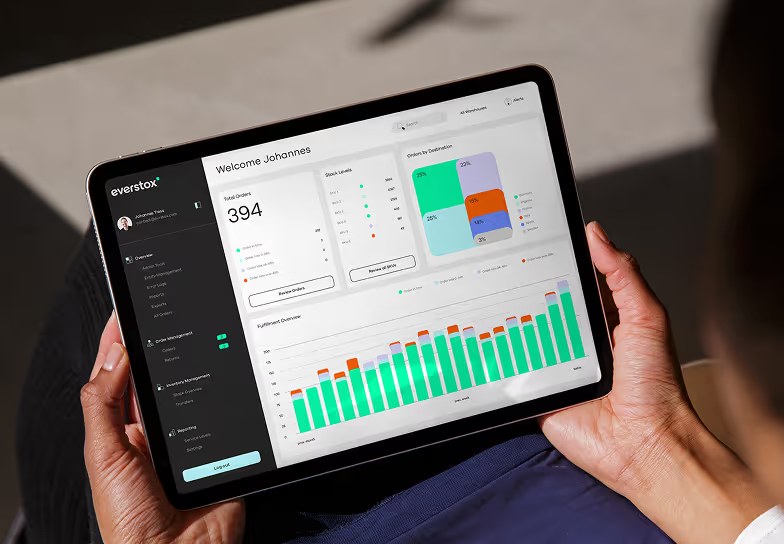
At everstox, Track & Trace is not just a service, but a strategic tool. Real-time data and dashboards give you valuable insights into your logistics processes, enabling data-driven decisions and operational excellence.
Frequently asked questions
How does Track & Trace work for international shipments?
Is Track & Trace also useful for small eCommerce companies?
What information is displayed on Track & Trace?
What happens when tracking data is not up to date?
About the author

Anna Kraus
eCommerce and logistics expert
With over seven years of experience in online marketing, Anna is responsible for the content strategy and editorial development of the everstox website. Her work focuses on eCommerce, logistics, and supply chain management, translating complex operational topics into clear, relevant, and actionable insights.
Since joining everstox in 2024, Anna has taken full ownership of the company’s editorial content, including blog articles, in-depth industry pieces, and the complete everstox glossary. Her content connects current trends in eCommerce and logistics with the real-world challenges faced by growing brands, helping decision-makers navigate an increasingly complex operational landscape.
Anna holds a bachelor’s degree from the University of Salzburg and earned a Master of Business Administration with a focus on health management from IU International University. Her master’s thesis on occupational health management reflects her analytical mindset and her interest in how integrated strategies can strengthen long-term business performance.
By combining academic rigor with hands-on marketing experience, Anna delivers content that goes beyond surface-level commentary. Her work offers readers a clear, well-informed perspective on the intersection of digital innovation, logistics, and supply chain operations, with a strong focus on practical relevance and strategic clarity.
More growth, less effort.
Scale fulfillment, shipping, and warehousing with a platform that brings everything together.
More interesting articles

Customs documents: how to avoid delays and in international trade
Your goods are packed, the carrier is booked, and the customer abroad is waiting for delivery – and suddenly everything comes to a halt. The reason: the shipment gets stuck in customs clearance. For eCommerce merchants and fulfillment providers, this is a worst-case scenario. It means delivery delays, unexpected storage fees, penalties, and frustrated customers.
The good news: many of these risks can be avoided with clear processes and complete customs documents – especially when all required documents are fully prepared and accurate.
This guide gives you a practical overview of which documents matter for export, how to avoid errors on the commercial invoice, and how automated customs declarations make your international growth scalable – from understanding liabilities to digital process optimization. Clean customs documentation is crucial in every section of the workflow, across any operational area.
Mastering seasonal peaks: how multi-warehousing helps prevent bottlenecks
Your marketing campaigns for Black Friday or the holiday season are running at full speed, the servers handle the traffic, orders skyrocket – and then everything stops. Not in your shop, but in the warehouse. When parcels remain stuck, throughput times explode and customers wait for their orders, the “logistics blackout” becomes reality.
A single warehouse location quickly turns into a “single point of failure” during peak season fulfillment. The solution for growing eCommerce and online retailers isn’t a bigger central warehouse, but flexibility: a strategy built on multi-warehousing.
This article shows you why decentralized warehousing has become essential in modern eCommerce. We break down the hidden risks of centralization, highlight the strategic advantages of a multi-warehousing setup and offer a clear guide on how to elevate your inventory management through automation and the right partner network.

Online marketplaces in Germany: opportunities for retailers and brands
Online marketplaces are digital platforms where multiple sellers offer their products, giving customers a wide selection. However, rising competition, high fees, and stricter quality requirements mean that sellers need a clear marketplace strategy and strong fulfillment partners to succeed.