

Parcel delivery services in Germany: which provider is right for my business?
10/28/2024

In Germany, there are several major parcel services that dominate the shipping market. These include DHL, Hermes, UPS, DPD, GLS and FedEx. Each provider offers specific advantages for different shipping needs. The goal for your online business should be to select the best B2C or B2B shipping service provider for each shipment, thus reducing delivery costs, optimizing delivery times, and increasing customer satisfaction. A multi-carrier strategy is the solution.
Who are the biggest parcel delivery service providers in Germany?
99% of all shipments in Germany are handled by six major parcel services:
DHL dominates with a market share of 48%. The largest German provider scores with a dense network of packing stations and nationwide service, both nationally and internationally.
Hermes is the second largest provider and offers Europe-wide deliveries as well as flexible parcel deliveries.
UPS is particularly impressive due to its strong international focus, fast express handling, and flexible shipping options.
DPD offers climate-neutral shipments and has made a name for itself with low prices and fast deliveries.
GLS offers fast shipping options, especially in Europe, but is also well-positioned for international shipping.
FedEx, known for fast express shipping, aims to be carbon neutral by 2040.
Parcel delivery services in Germany: strengths overview
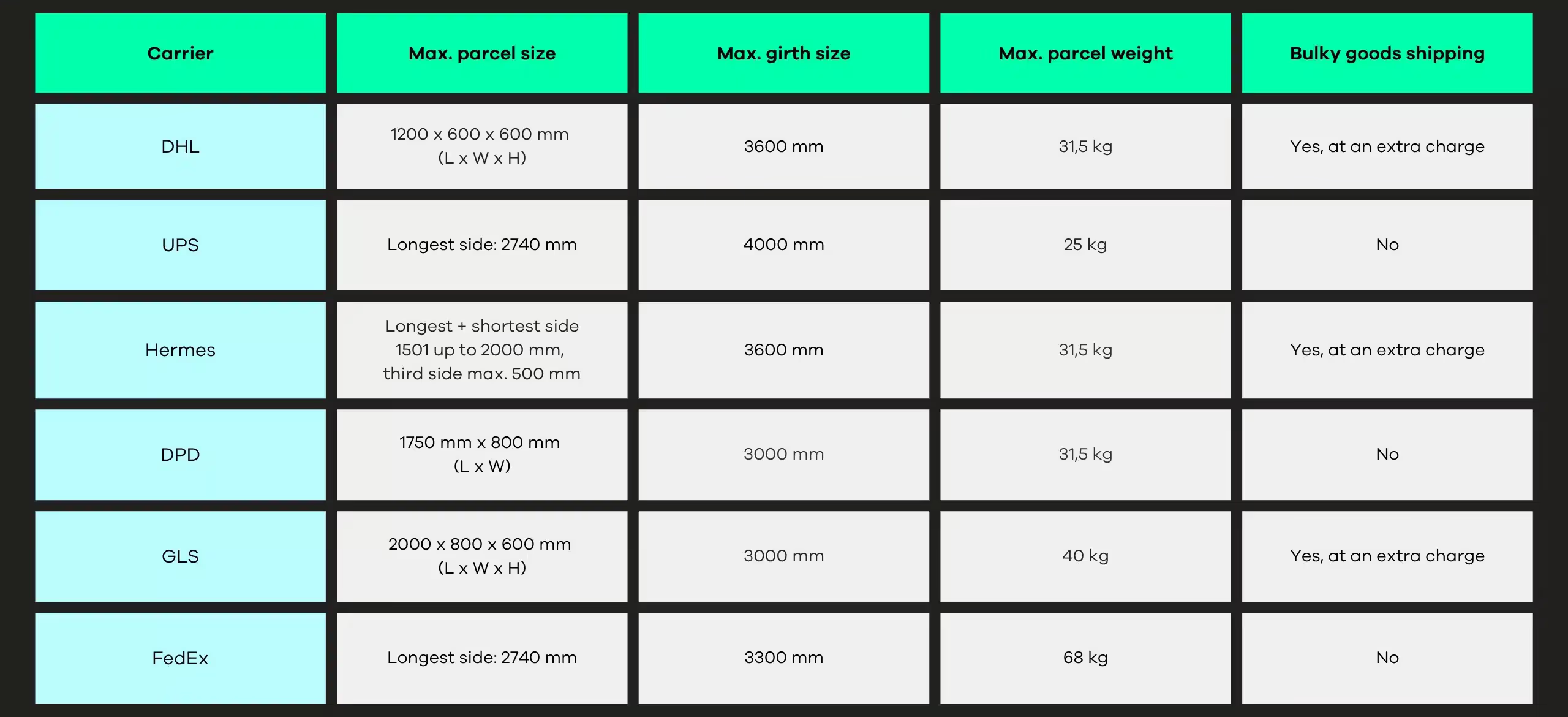
The data in the illustration refer to shipments within the EU.
DHL: Reliability and global reach
- Reliability: DHL is known for its high delivery reliability among all parcel service providers.
- Flexible parcel receipt: With Packstations and flexible delivery options, DHL offers a high level of customer satisfaction.
- Globally active: DHL operates worldwide and is strongly positioned both nationally and internationally.
- Climate-neutral shipping: The GoGreen program supports climate-friendly delivery of parcels.
Hermes: Cost-effective solutions for eCommerce
- Affordable prices: Hermes scores particularly well with its attractive shipping costs for eCommerce companies.
- Multiple delivery attempts: up to four delivery attempts increase the likelihood of successfully delivering the parcel.
- Wide network of parcel shops: customers can flexibly pick up and send parcels in an extensive network of parcel shops.
UPS: Speed and global presence
- Strong international presence: UPS is a global player with a comprehensive international infrastructure.
- Fast express delivery: UPS is an excellent choice for express deliveries.
- Flexible delivery options: UPS offers a wide range of delivery options that give companies flexibility.
DPD: Speed and sustainability
- Climate-neutral shipping: DPD ships in a climate-neutral way as a standard.
- Fast delivery times: DPD is particularly popular for eCommerce because of its speed.
- Reasonable prices: Compared to other parcel delivery services, DPD offers good value for money, especially for national shipments.
GLS: Efficiency in Europe
- Fast shipping in Europe: GLS is particularly efficient within Europe.
- 100% carbon neutral since 2019: All shipments are carbon neutral, which improves the ecological balance.
- Higher insurance: GLS offers higher shipping insurance as a standard.
FedEx: Express expert with a global presence
- Fast express deliveries: FedEx is the market leader in express deliveries.
- Global shipping: FedEx covers almost all global markets and is particularly strong for international shipments.
Selection criteria for parcel servicesfor online retailers
Selection criteria for parcel servicesfor online retailers
It is crucial for your business that the goods you order reach your customers on time and in perfect condition. Therefore, the reliability of a parcel service is an important selection criterion.
A service provider that consistently meets its delivery times and minimizes failures not only increases customer satisfaction but also trust in the brand. The ability to track delivery times precisely and provide customers with up-to-date updates is also an important factor.
Costs and prices
Shipping costs have a significant impact on the profitability of your business. Especially in eCommerce, where margins are often tightly calculated, choosing a parcel service with competitive prices is essential.
You should choose service providers that offer fair and transparent pricing structures. Discounts for higher shipping volumes are also a criterion that should be considered.
Comparison of parcel delivery service prices
A price comparison of the various providers will help you find the best value for money. Providers such as DHL, Hermes, DPD, and UPS can have very different price structures.
Particularly for large shipping volumes or international shipments, price differences can have a significant impact on total costs. Many companies therefore use shipping platforms to compare providers' prices and services.
Shipping options and solutions
Your company should use a wide range of shipping options to respond flexibly to customer demands.
Popular options include express shipping, same-day delivery, and carbon-neutral deliveries.
Express shipping is particularly important to ensure fast deliveries and to stay competitive. Same-day delivery is increasingly in demand in urban areas and can provide competitive advantages.
A reliable shipping provider that offers these solutions efficiently and cost-effectively increases customer satisfaction and business agility.
Sustainable shipping solutions
Sustainability is a key issue for many companies. An increasing number of parcel services are offering carbon-neutral shipping options in which CO2 emissions are offset by compensation projects.
This aspect is becoming more and more important for companies that want to improve their environmental balance and should also be considered when choosing a shipping service provider.
Multi-carrier strategy: the perfect shipping solution?
Many companies use a multi-carrier strategy to optimize shipping costs and make their logistics more flexible. By using different shipping service providers in a targeted way, they can always select the most cost-effective provider, avoid missed deliveries, and offer their customers a better delivery experience. This approach enables greater efficiency and customer satisfaction, especially in times of increasing demands for faster delivery and sustainability.
Cost efficiency
Try to always choose the cheapest provider for each shipment. Flexible price comparisons help you ensure that you don't incur unnecessary costs. See if the parcel delivery company also offers discounts for larger shipping volumes.
Reduced risk of loss
Bottlenecks and overloading can occur for parcel service providers, especially at peak times. The result is delivery delays and dissatisfied customers. Part of the multi-carrier strategy is that you are not dependent on a single provider. Therefore, try to design your carrier mix so that even at peak parcel times, your supply chain is not severely affected.
Improved customer experience
Your customers love customized shipping options such as express or same-day delivery. With a mix of different parcel delivery services, you can ensure that your customers always have the best choice. The result: fast and flexible delivery times and satisfied customers.
Overall, a multi-carrier strategy provides you with a flexible, cost-efficient, and fail-safe shipping solution that optimally addresses the individual requirements of your company and your customers. By using multiple shipping service providers, you can gain a competitive advantage by choosing the best shipping option while keeping costs low. The ability to react flexibly to market demands and customer needs makes a multi-carrier strategy a crucial success factor in modern logistics.
everstox as a fulfillment solution with a network of shipping service providers
We offer you access to a network of the best shipping providers as well as an integrated software solution for your fulfillment.
With our platform, you can dynamically access different providers based on your shipments' requirements – nationally and internationally.
From DHL to Hermes, UPS to DPD, you have full control over the shipping process and benefit from optimized delivery costs and increased customer satisfaction.
Frequently asked questions
About the author

Anna Kraus
eCommerce and logistics expert
With over seven years of experience in online marketing, Anna is responsible for the content strategy and editorial development of the everstox website. Her work focuses on eCommerce, logistics, and supply chain management, translating complex operational topics into clear, relevant, and actionable insights.
Since joining everstox in 2024, Anna has taken full ownership of the company’s editorial content, including blog articles, in-depth industry pieces, and the complete everstox glossary. Her content connects current trends in eCommerce and logistics with the real-world challenges faced by growing brands, helping decision-makers navigate an increasingly complex operational landscape.
Anna holds a bachelor’s degree from the University of Salzburg and earned a Master of Business Administration with a focus on health management from IU International University. Her master’s thesis on occupational health management reflects her analytical mindset and her interest in how integrated strategies can strengthen long-term business performance.
By combining academic rigor with hands-on marketing experience, Anna delivers content that goes beyond surface-level commentary. Her work offers readers a clear, well-informed perspective on the intersection of digital innovation, logistics, and supply chain operations, with a strong focus on practical relevance and strategic clarity.
More growth, less effort.
Scale fulfillment, shipping, and warehousing with a platform that brings everything together.
More interesting articles

Customs documents: how to avoid delays and in international trade
Your goods are packed, the carrier is booked, and the customer abroad is waiting for delivery – and suddenly everything comes to a halt. The reason: the shipment gets stuck in customs clearance. For eCommerce merchants and fulfillment providers, this is a worst-case scenario. It means delivery delays, unexpected storage fees, penalties, and frustrated customers.
The good news: many of these risks can be avoided with clear processes and complete customs documents – especially when all required documents are fully prepared and accurate.
This guide gives you a practical overview of which documents matter for export, how to avoid errors on the commercial invoice, and how automated customs declarations make your international growth scalable – from understanding liabilities to digital process optimization. Clean customs documentation is crucial in every section of the workflow, across any operational area.
Mastering seasonal peaks: how multi-warehousing helps prevent bottlenecks
Your marketing campaigns for Black Friday or the holiday season are running at full speed, the servers handle the traffic, orders skyrocket – and then everything stops. Not in your shop, but in the warehouse. When parcels remain stuck, throughput times explode and customers wait for their orders, the “logistics blackout” becomes reality.
A single warehouse location quickly turns into a “single point of failure” during peak season fulfillment. The solution for growing eCommerce and online retailers isn’t a bigger central warehouse, but flexibility: a strategy built on multi-warehousing.
This article shows you why decentralized warehousing has become essential in modern eCommerce. We break down the hidden risks of centralization, highlight the strategic advantages of a multi-warehousing setup and offer a clear guide on how to elevate your inventory management through automation and the right partner network.

Online marketplaces in Germany: opportunities for retailers and brands
Online marketplaces are digital platforms where multiple sellers offer their products, giving customers a wide selection. However, rising competition, high fees, and stricter quality requirements mean that sellers need a clear marketplace strategy and strong fulfillment partners to succeed.