

What is 3PL: definition and differences in logistics
6/14/2024
What is 3PL fulfillment?
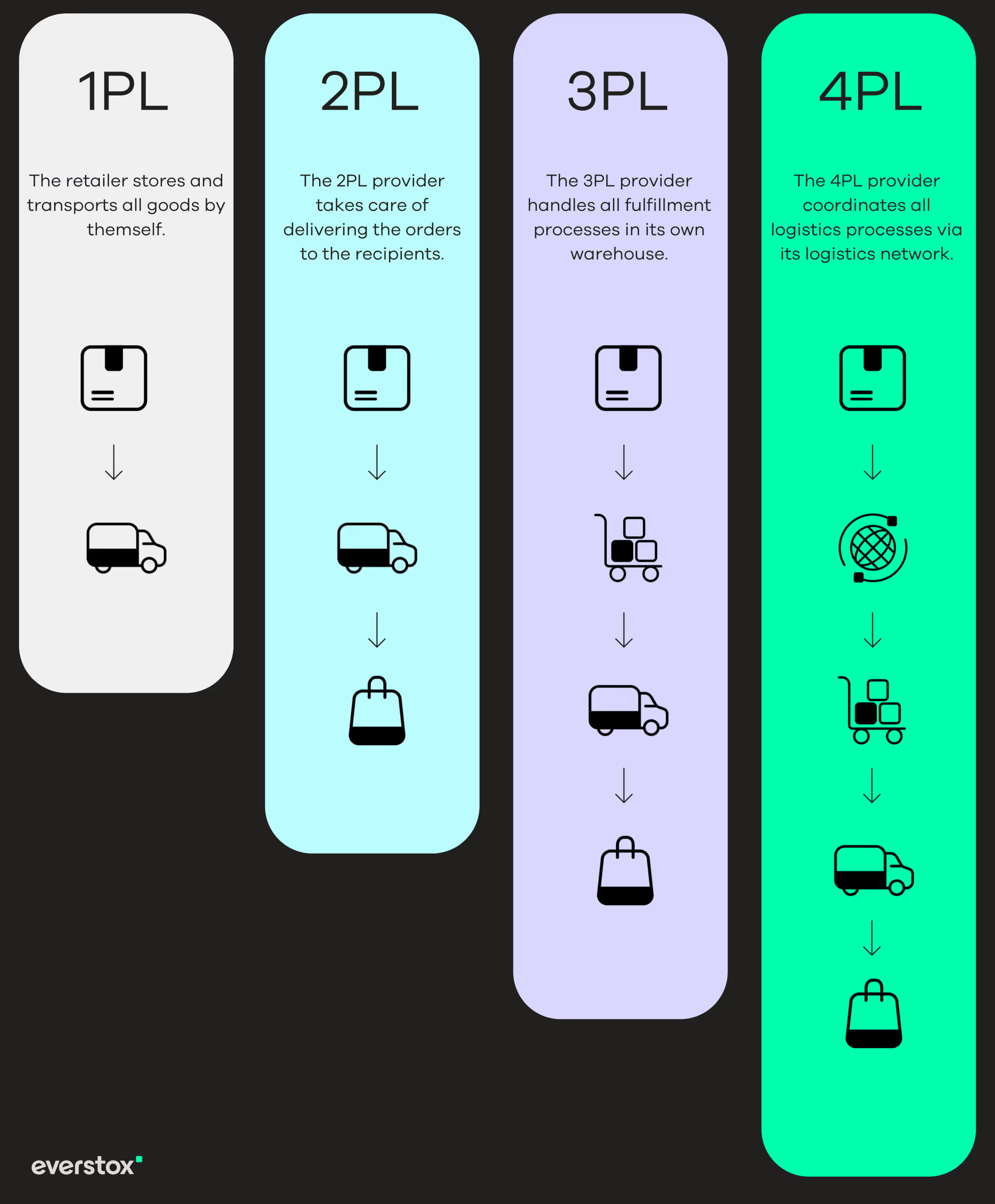
Various fulfillment models in logistics are classified as in-house fulfillment and outsourcing of logistics services. These models are abbreviated as 1PL, 2PL, 3PL, 4PL or 5PL.
“PL” stands for “Party Logistics” and indicates how many parties are involved in the logistics processes. The degree of outsourcing increases with the number of parties involved.
In the 1PL model, the retailer takes on the entire range of logistics tasks itself. They take care of warehousing, order picking, shipping, and the return shipment of their products internally.
The 5PL (Fifth Party Logistics) model is a highly outsourced form of fulfillment. The 5PL service providers take over the strategic management of logistics and the rest of the supply chain, including production.
3PL – Third Party Logistics providers – are positioned in the middle of the spectrum and take over the processes relating to warehousing, order picking, and transportation. The 3PL provider contributes its own assets, e.g. warehouses and shipping vehicles.
Differences – 4PL vs. 3PL vs. 2PL vs. 1PL
1PL – First Party Logistics
The company stores and transports its goods itself. That makes the company independent but limits its capacity and flexibility.
2PL – Second Party Logistics
The 2PL provider handles the transportation of goods to the end customer and may also offer basic warehousing services.
3PL – Third Party Logistics
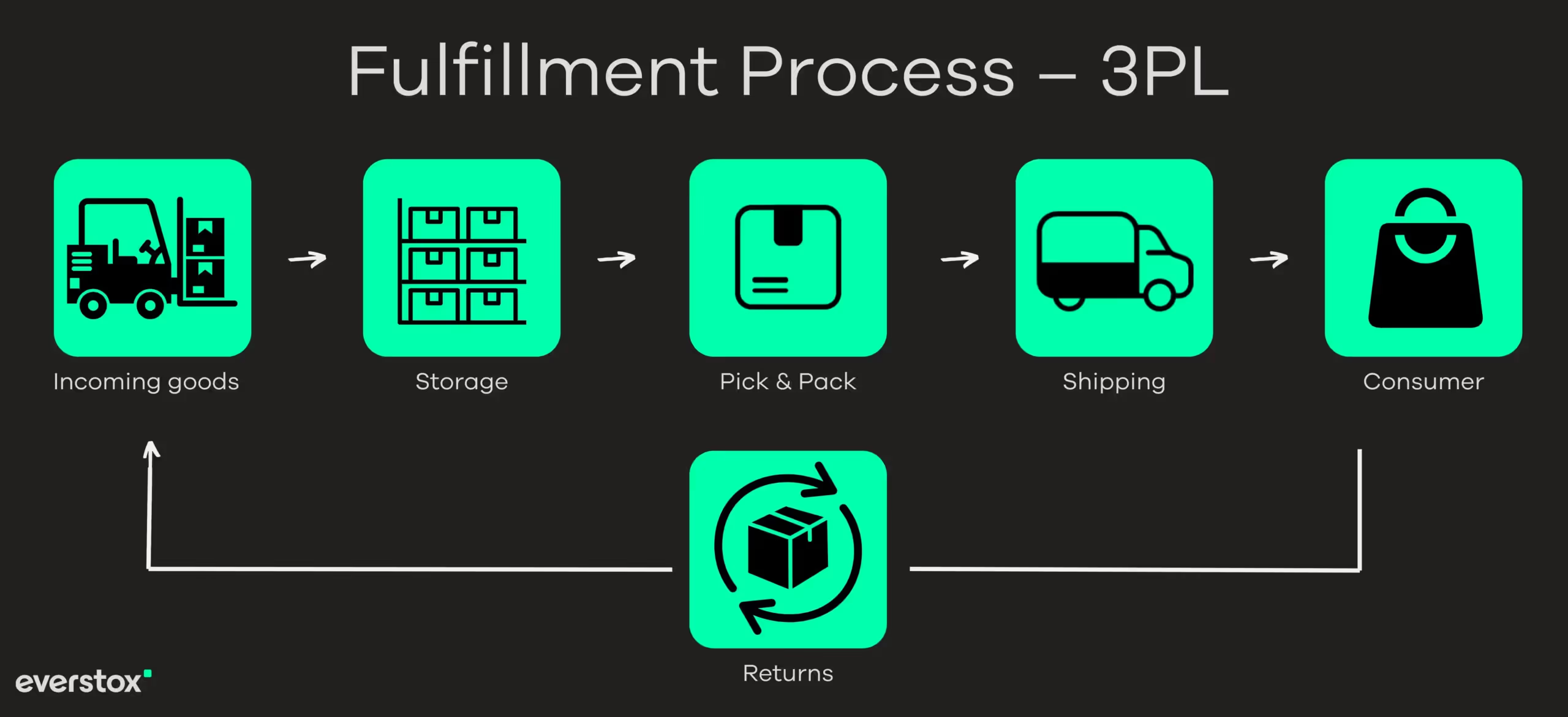
A third-party logistics provider is an external logistics provider. It handles the entire logistics process, including goods receipt, storage, order picking, shipping, and returns management.
4PL – Fourth Party Logistics
Like a 3PL provider, a 4PL provider is an external logistics service provider.
However, a 4PL coordinates all logistics processes via a curated network of logistics service providers and, unlike a 3PL, does not contribute resources such as warehouses or transport vehicles.
That is the largest difference between 3PL and 4PL providers.
What is a Third Party Logistics provider (3PL provider)?
When working with a 3PL, an external logistics service provider takes over the entire order fulfillment. This means the third-party logistics provider handles the warehousing, order picking, and all other fulfillment services. The third-party logistics partner contributes its expertise from the logistics industry and the infrastructure with the necessary software to optimize the logistics processes and supply chain management for its customers.
In contrast to the 4PL, the 3PL provider has its own assets, such as warehouses or warehouse employees. Third-party logistics service providers can differ greatly in services, technologies, and capacities. Some service providers only have a single warehouse, use outdated technologies, and do not offer any individual services in addition to their standard services.
Other third-party logistics providers are more modern, operate in different countries, and offer a wide range of services. Ultimately, the individual requirements of an external partner are always decisive when choosing the right logistics partner.
Advantages of the 3PL model
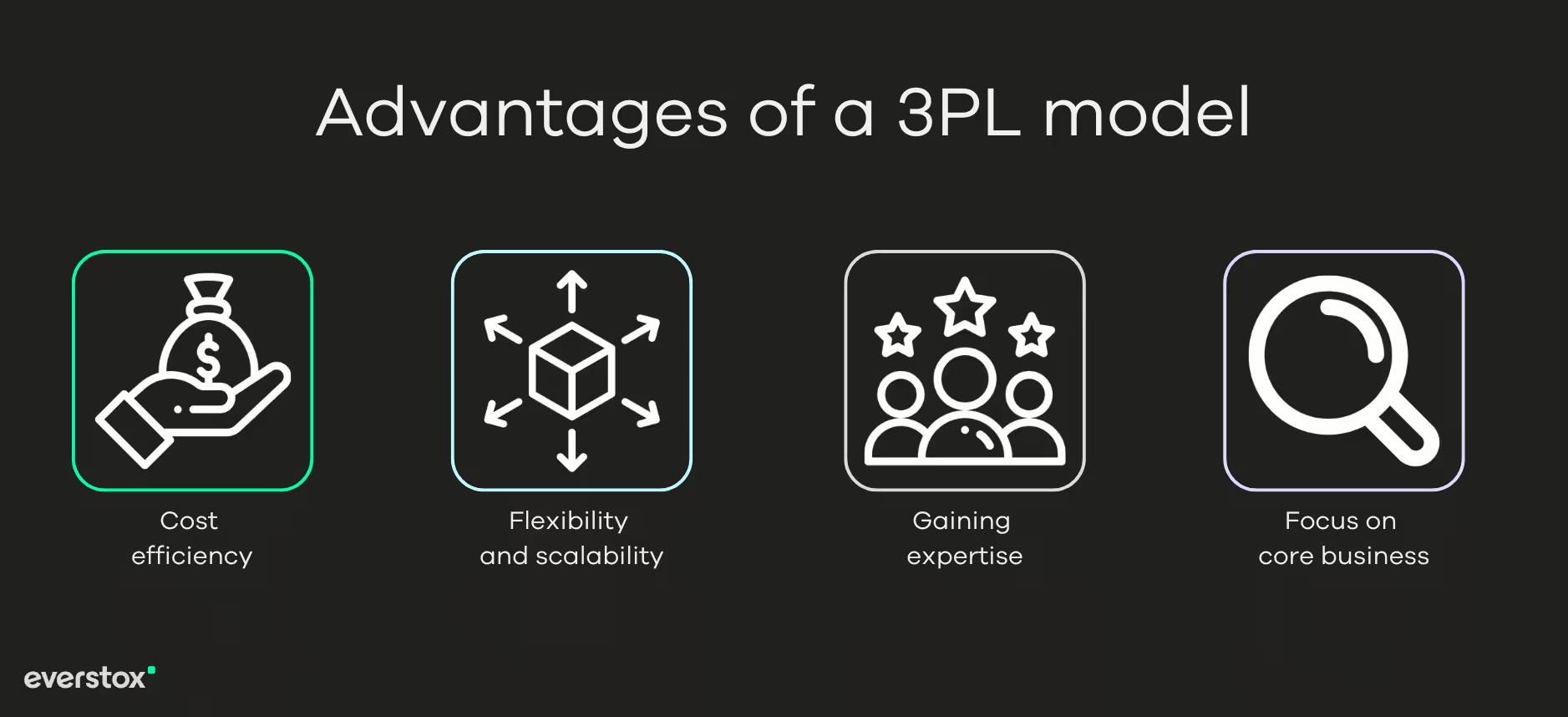
The 3PL model is characterized by a higher degree of outsourcing of fulfillment processes than first and second-party logistics models. This outsourcing has several advantages for merchants who use the services of the 3PL provider.
Cost efficiency
Outsourcing to a 3PL offers the advantage that retailers do not have to tie up capital to handle their operations.
By outsourcing to a third-party logistics provider, companies can reduce their expenses for warehousing, order picking, and transportation. The costs for internal warehouse employees are also lower.
Thanks to their extensive logistics network, third-party logistics providers usually have better negotiating leverage and can offer volume discounts. That reduces the fulfillment costs per order for individual customers.
Flexibility and scalability
The e-commerce industry is characterized by predictable or spontaneous market fluctuations that make it necessary to increase resources. With an external service provider, companies can react quicker to changes and take advantage of economies of scale.
Gaining expertise
A third-party logistics provider offers companies access to in-depth industry knowledge and expertise. That is particularly useful if the company’s own logistics department is small or if logistics has previously been organized in a rather rudimentary way.
3PL providers can also offer valuable know-how and logistical support when expanding into international markets or other sales channels. That can prevent delays and long lead times.
Focus on the core business
By outsourcing the logistics infrastructure to an external provider, merchants can focus on the most important thing: their core business. While the 3PL provider takes control of fulfillment, more internal capacity and capital can be used for product development or marketing, for example.
Disadvantages of the 3PL model
Every logistics model also has disadvantages. Ultimately, choosing the suitable model depends on various factors and the needs structure of your company.
In the case of the 3PL model, the task of control, in particular, is one of the “downsides” as essential core processes have to be outsourced. As a result, quality assurance no longer depends solely on internal processes but also includes factors beyond the control of the company placing the order.
If the 3PL provider takes over the supply chain, it controls shipping and returns management. In the event of errors, e.g. unreliable deliveries, end customers hold the merchant responsible, not the 3PL service provider. Customer relationships and image can suffer as a result.
That makes it all the more important to ensure the highest quality of service and smooth communication when selecting a 3PL partner.
What special services does a 3PL service provider offer?
- Incoming goods: the 3PL service provider receives the goods at the warehouse
- Storage: the 3PL provider stores the goods in the warehouse
- Picking: the products are picked and packed
- Packaging: the order is packaged according to the merchant’s specifications
- Shipping: the 3PL service provider takes care of collection and shipping by the selected shipping service provider
- Returns: returns are accepted, inspected, classified, processed, and reclaimed at the warehouse
How to choose the right 3PL provider
Which logistics service provider best suits your company depends on several factors. Below there are a few important criteria for choosing the right 3PL provider.
One of the most important criteria when choosing your logistics partner is the extent to which they can grow with you, your plans, and your requirements.
Scalability
Think ahead to the future and choose a provider that can offer you sufficient storage capacity, flexibility in expanding distribution channels, and, if necessary, internationalization options.
Skills and specific expertise
Check whether the third-party logistics provider can meet your specific needs in handling your products and services. Whether multi-carrier fulfillment, track & trace, or returns logistics – your 3PL partner should be able to meet your requirements and have the relevant expertise for your industry.
Technical expertise and integration
The use of technologies that can be used to automate tedious manual processes, for example, distinguishes your 3PL provider as a modern logistics service provider.
Especially if your company wants to make data-driven decisions, you should make sure that the third-party logistics provider can enable integrations with all your eCommerce platforms.
Image and service quality
Pay attention to the service provider’s image in the industry and how its service quality is rated. The 3PL partner should be able to meet your requirements and guarantee a high standard of quality.
Still not sure who to work with?
Choosing the right fulfillment partner is crucial, but with suitable support, the decision making process doesn’t have to be complicated.
everstox offers a platform that combines B2C and B2B fulfillment, multi-carrier B2C or B2B shipping, and modern software to simplify logistics and provide expert advice for a stress-free decision.
Our logistics experts will be happy to take a look at your current set-up without any obligation and give you free consultation.
Frequently asked questions
What is 3PL?
What special logistics services does a 3PL offer?
What does a 3PL cost?
When do I need a 4PL service provider for my business?
About the author

Anna Kraus
eCommerce and logistics expert
With over seven years of experience in online marketing, Anna is responsible for the content strategy and editorial development of the everstox website. Her work focuses on eCommerce, logistics, and supply chain management, translating complex operational topics into clear, relevant, and actionable insights.
Since joining everstox in 2024, Anna has taken full ownership of the company’s editorial content, including blog articles, in-depth industry pieces, and the complete everstox glossary. Her content connects current trends in eCommerce and logistics with the real-world challenges faced by growing brands, helping decision-makers navigate an increasingly complex operational landscape.
Anna holds a bachelor’s degree from the University of Salzburg and earned a Master of Business Administration with a focus on health management from IU International University. Her master’s thesis on occupational health management reflects her analytical mindset and her interest in how integrated strategies can strengthen long-term business performance.
By combining academic rigor with hands-on marketing experience, Anna delivers content that goes beyond surface-level commentary. Her work offers readers a clear, well-informed perspective on the intersection of digital innovation, logistics, and supply chain operations, with a strong focus on practical relevance and strategic clarity.
More growth, less effort.
Scale fulfillment, shipping, and warehousing with a platform that brings everything together.
More interesting articles
Customs documents: how to avoid delays and in international trade
Your goods are packed, the carrier is booked, and the customer abroad is waiting for delivery – and suddenly everything comes to a halt. The reason: the shipment gets stuck in customs clearance. For eCommerce merchants and fulfillment providers, this is a worst-case scenario. It means delivery delays, unexpected storage fees, penalties, and frustrated customers.
The good news: many of these risks can be avoided with clear processes and complete customs documents – especially when all required documents are fully prepared and accurate.
This guide gives you a practical overview of which documents matter for export, how to avoid errors on the commercial invoice, and how automated customs declarations make your international growth scalable – from understanding liabilities to digital process optimization. Clean customs documentation is crucial in every section of the workflow, across any operational area.
Mastering seasonal peaks: how multi-warehousing helps prevent bottlenecks
Your marketing campaigns for Black Friday or the holiday season are running at full speed, the servers handle the traffic, orders skyrocket – and then everything stops. Not in your shop, but in the warehouse. When parcels remain stuck, throughput times explode and customers wait for their orders, the “logistics blackout” becomes reality.
A single warehouse location quickly turns into a “single point of failure” during peak season fulfillment. The solution for growing eCommerce and online retailers isn’t a bigger central warehouse, but flexibility: a strategy built on multi-warehousing.
This article shows you why decentralized warehousing has become essential in modern eCommerce. We break down the hidden risks of centralization, highlight the strategic advantages of a multi-warehousing setup and offer a clear guide on how to elevate your inventory management through automation and the right partner network.

Online marketplaces in Germany: opportunities for retailers and brands
Online marketplaces are digital platforms where multiple sellers offer their products, giving customers a wide selection. However, rising competition, high fees, and stricter quality requirements mean that sellers need a clear marketplace strategy and strong fulfillment partners to succeed.