

FBA vs FBM: which fulfillment strategy suits your business better?
3/26/2025
What is Fulfillment by Amazon (FBA)?
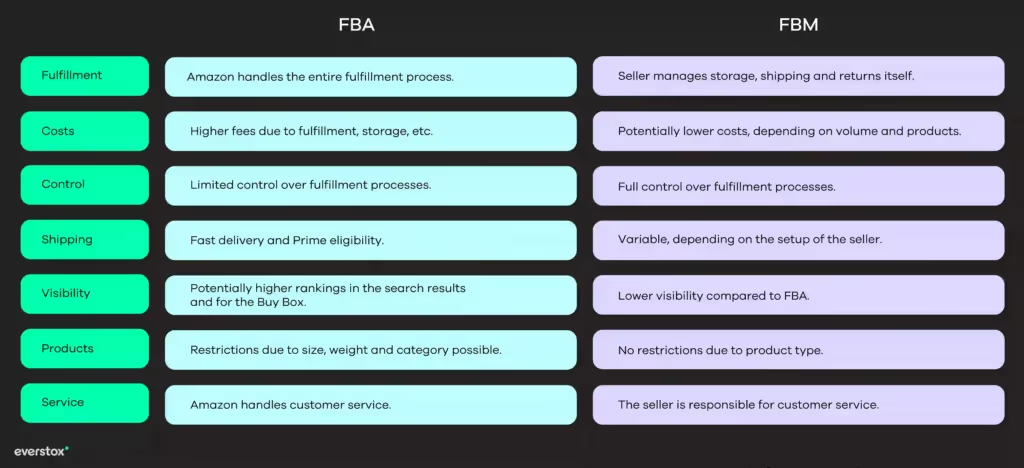
With FBA Fulfillment by Amazon, merchants can send their items to Amazon, where they are stored in the company’s logistics centers. Once an order is received, Amazon handles all order fulfillment, including packaging, shipping, customer service and returns management.
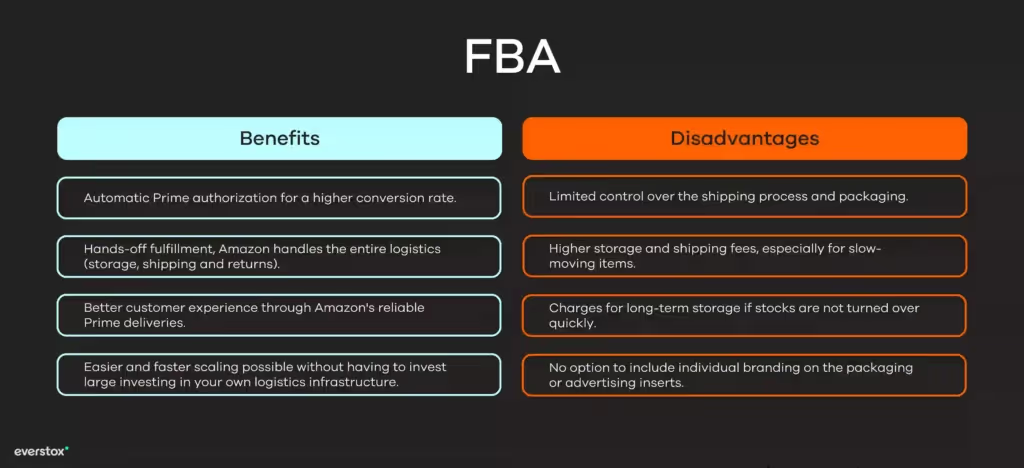
One of the biggest benefits of FBA is the automatic qualification for the Prime program, whereby products are marked with the Prime logo. This symbol makes it easier for customers to recognize faster delivery times and can significantly increase conversion rates.
Another advantage is access to Amazon’s vast network. Retailers who use FBA benefit from an optimized logistics infrastructure, which is particularly advantageous for companies with high order volumes. In addition, participation in the program increases the likelihood of winning the coveted Buy Box, which plays a crucial role in increasing sales.
However, FBA is not without its disadvantages. The storage and shipping fees can quickly add up, especially for slow-moving or bulky items. Additionally, retailers have limited control over the shipping process and packaging, which can be problematic for brands with unique branding requirements.
What is Fulfillment by Merchant (FBM)?
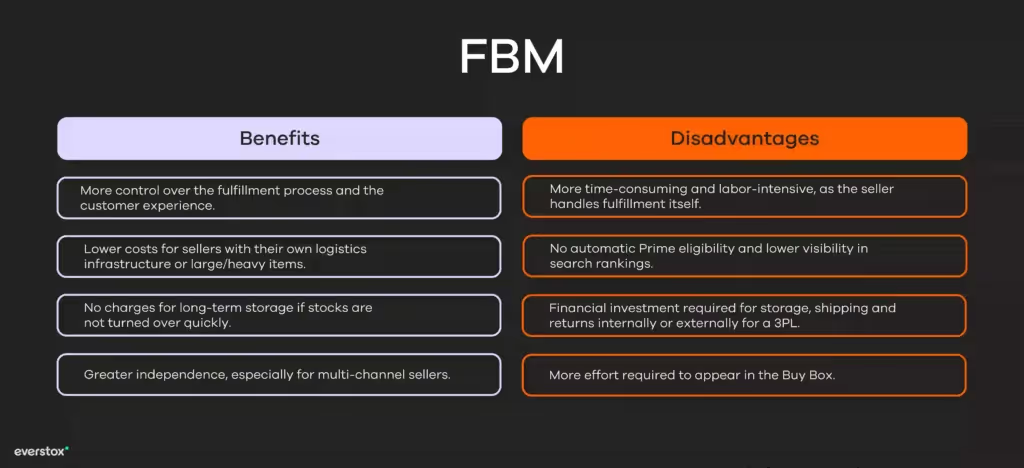
With the FBM model, the logistics remain entirely in the hands of the seller. Sellers are responsible for warehousing, packaging and shipping their items themselves or work with an external logistics service provider. This strategy offers more control over the shipping process and allows them to use the Prime logo only if they qualify for the Seller Fulfilled Prime program.
FBM is particularly suitable for retailers who sell high-margin products or prefer customized packaging and branding. Those who already have a well-organized warehouse and logistics structure can save costs with FBM, as there are no additional Amazon fees for storage and shipping.
One disadvantage of FBM is the lower visibility in searches on Amazon. As FBA products are often given preferential treatment and appear more attractive due to Prime status, it can be more difficult for FBM sellers to beat the competition. In addition, the retailer has to take care of customer service and returns management themselves, which increases the administrative burden.
Cost comparison: FBA vs. FBM
The choice between FBA and FBM is not only a question of strategy, but also of costs. In addition to storage costs and shipping fees, FBA also incurs additional service costs, which vary depending on the product type and order volume. Especially during peak season, order fulfillment fees can increase as Amazon charges dynamic pricing for storage.
FBM offers greater flexibility in terms of costs, as retailers can choose their own shipping strategy. Those who work with an external fulfillment service provider can potentially save money through optimized processes and volume-based shipping rates. However, sellers must take care of returns management, customer inquiries and all logistics themselves, which can result in additional personnel costs.
Shopify Fulfillment vs. Amazon FBA
Many retailers not only sell via Amazon, but also use platforms such as Shopify to reach a broader customer base. This raises the question of whether it makes sense to use Amazon FBA for all sales channels or whether a separate logistics solution is more advantageous.
With Amazon’s multi-channel fulfillment service, orders from other platforms can also be processed via the FBA network. This can be an efficient solution if FBA is already being used and a uniform shipping strategy is desired. However, the fees for this service are often higher than with specialized fulfillment service providers, and retailers have limited control over packaging.
For brands that prefer consistent branding and customized shipping solutions, an external fulfillment provider or Shopify’s own fulfillment program may be a more flexible and cost-effective alternative.
Pre-FBA Fulfillment: preparations for Amazon warehouses
Many retailers rely on pre-FBA fulfillment before they send their products to Amazon. In this process, the goods are first temporarily stored in an external warehouse and prepared for shipping. This has several advantages, particularly in terms of cost optimization and compliance with Amazon guidelines.
Thorough quality control helps to sort out faulty items before they are sent to Amazon. Correct labeling according to Amazon’s specifications can also be done in advance to avoid delays or rejections by Amazon. If you work with a specialized fulfillment service provider, you can also benefit from better shipping conditions.
FBA Multi-Channel Fulfillment: is it worth it?
FBA Multi-Channel Fulfillment enables merchants to process orders from other sales channels such as Shopify or eBay via Amazon. This can be useful if FBA is already being used and a central solution for the entire logistics is desired.
However, the fees for this service are often higher than for independent fulfillment providers. There are also restrictions on packaging and shipping options, as Amazon carries out shipping according to its own standards. Companies that want to offer a personalized customer experience could be more flexible with a separate fulfillment solution.
Conclusion: FBA oder FBM – what is the better choice?
The decision between Amazon FBA and FBM depends heavily on the individual business model. Retailers who want to benefit from scalability and Prime status often opt for FBA, as it reduces logistical effort and increases visibility on Amazon. On the other hand, those who want to retain control over shipping, costs and branding can operate more flexibly with FBM.
A combination of both models can also be a sensible strategy. Many retailers use FBA for their bestsellers and rely on FBM for special products or markets. Those looking for an even more individual solution can combine the best of both worlds with external fulfillment providers such as everstox and optimally implement both multi-channel fulfillment and individual shipping strategies.
Frequently asked questions
What is the difference between Fulfillment by Amazon (FBA) and Fulfillment by Merchant (FBM)?
What role does a pre-FBA service play in my success as an Amazon seller?
How can I calculate the costs for my FBA shipping?
About the author

Anna Kraus
eCommerce and logistics expert
With over seven years of experience in online marketing, Anna is responsible for the content strategy and editorial development of the everstox website. Her work focuses on eCommerce, logistics, and supply chain management, translating complex operational topics into clear, relevant, and actionable insights.
Since joining everstox in 2024, Anna has taken full ownership of the company’s editorial content, including blog articles, in-depth industry pieces, and the complete everstox glossary. Her content connects current trends in eCommerce and logistics with the real-world challenges faced by growing brands, helping decision-makers navigate an increasingly complex operational landscape.
Anna holds a bachelor’s degree from the University of Salzburg and earned a Master of Business Administration with a focus on health management from IU International University. Her master’s thesis on occupational health management reflects her analytical mindset and her interest in how integrated strategies can strengthen long-term business performance.
By combining academic rigor with hands-on marketing experience, Anna delivers content that goes beyond surface-level commentary. Her work offers readers a clear, well-informed perspective on the intersection of digital innovation, logistics, and supply chain operations, with a strong focus on practical relevance and strategic clarity.
More growth, less effort.
Scale fulfillment, shipping, and warehousing with a platform that brings everything together.
More interesting articles

Customs documents: how to avoid delays and in international trade
Your goods are packed, the carrier is booked, and the customer abroad is waiting for delivery – and suddenly everything comes to a halt. The reason: the shipment gets stuck in customs clearance. For eCommerce merchants and fulfillment providers, this is a worst-case scenario. It means delivery delays, unexpected storage fees, penalties, and frustrated customers.
The good news: many of these risks can be avoided with clear processes and complete customs documents – especially when all required documents are fully prepared and accurate.
This guide gives you a practical overview of which documents matter for export, how to avoid errors on the commercial invoice, and how automated customs declarations make your international growth scalable – from understanding liabilities to digital process optimization. Clean customs documentation is crucial in every section of the workflow, across any operational area.
Mastering seasonal peaks: how multi-warehousing helps prevent bottlenecks
Your marketing campaigns for Black Friday or the holiday season are running at full speed, the servers handle the traffic, orders skyrocket – and then everything stops. Not in your shop, but in the warehouse. When parcels remain stuck, throughput times explode and customers wait for their orders, the “logistics blackout” becomes reality.
A single warehouse location quickly turns into a “single point of failure” during peak season fulfillment. The solution for growing eCommerce and online retailers isn’t a bigger central warehouse, but flexibility: a strategy built on multi-warehousing.
This article shows you why decentralized warehousing has become essential in modern eCommerce. We break down the hidden risks of centralization, highlight the strategic advantages of a multi-warehousing setup and offer a clear guide on how to elevate your inventory management through automation and the right partner network.

Online marketplaces in Germany: opportunities for retailers and brands
Online marketplaces are digital platforms where multiple sellers offer their products, giving customers a wide selection. However, rising competition, high fees, and stricter quality requirements mean that sellers need a clear marketplace strategy and strong fulfillment partners to succeed.